Dental FSP Germany for Indian Dentists
How BDS dentists can prepare for professional dental German communication
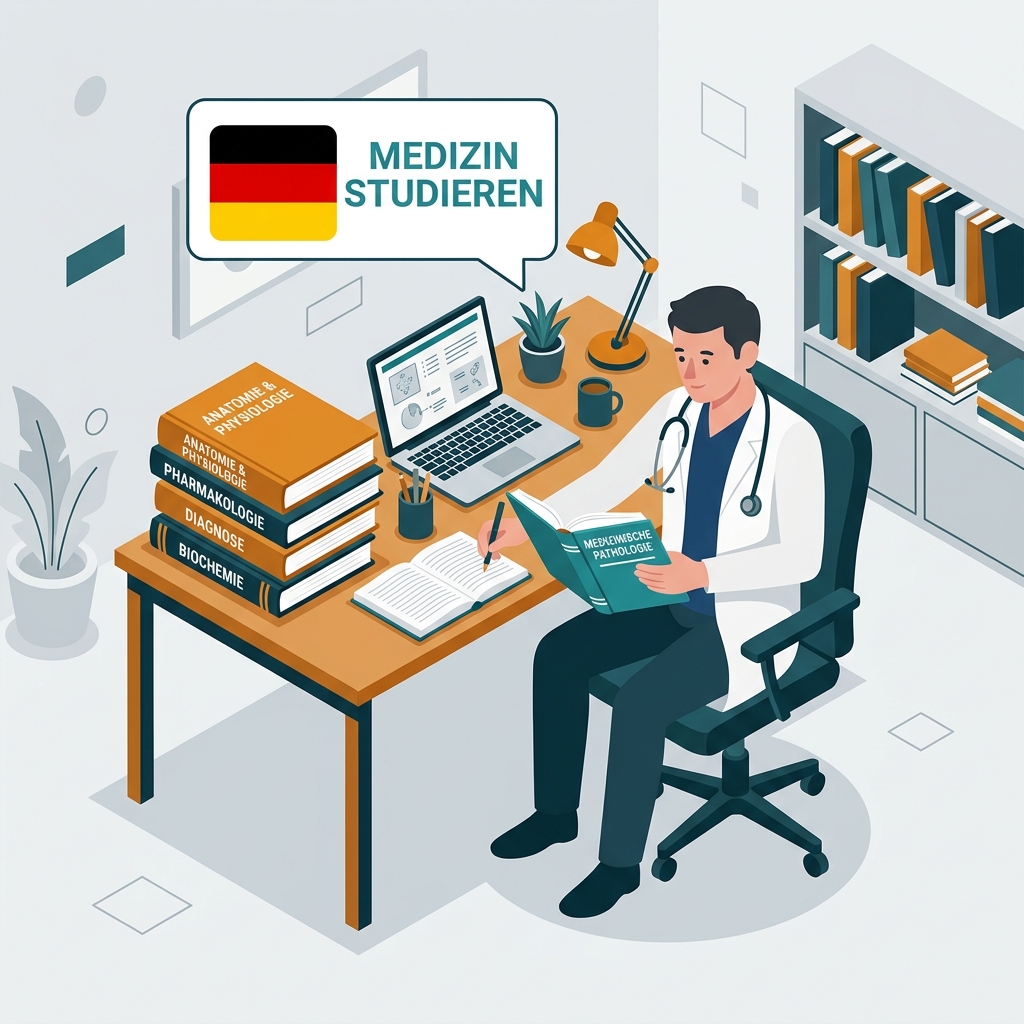
Dental FSP Germany is the professional language examination that checks whether a foreign-trained dentist can communicate safely in German dental practice. For Indian BDS dentists, it is one of the most important steps in the dental Approbation pathway.
The dental FSP is not just a German grammar test. It is a dentistry communication test. You must understand patient complaints, ask relevant questions, explain findings, discuss treatment options, document the case, and speak professionally with colleagues. This guide explains the exam purpose, likely format, preparation strategy, vocabulary areas, mistakes, and how MedGermany helps BDS dentists prepare.
What Is the Dental FSP?
FSP stands for Fachsprachpruefung, which means professional language examination. For dentists, the exam focuses on dental professional communication. The authority wants to know whether you can communicate with patients and dental colleagues in German without creating safety risks.
A general B2 certificate may show that you can use German at an upper-intermediate level. The dental FSP asks a different question: can you function as a dentist in German? Can you take a dental history? Can you explain a root canal, extraction, crown, periodontal treatment, or oral hygiene advice? Can you document findings clearly?
Who Needs Dental FSP?
Foreign-trained dentists applying for dental Approbation commonly need to prove professional language ability. The exact requirement and exam body can vary by state, but Indian BDS dentists should plan as if dental professional German will be required. It is too important to leave until the last moment.
If you are planning dental Approbation Germany, dental FSP preparation should be part of your main roadmap from the beginning.
Dental FSP Format
The exact exam format can vary, but professional language exams often include three practical parts: patient conversation, written documentation, and colleague communication. For dentists, these are adapted to dental practice scenarios.
| Part | What It Tests | Example Skills |
|---|---|---|
| Patient conversation | Dentist-patient communication | Pain history, explanation, consent, empathy |
| Documentation | Written dental German | Findings, diagnosis, treatment plan, notes |
| Colleague discussion | Professional handover | Case summary, terminology, clinical reasoning |
Because state formats can differ, always check the current exam structure with the relevant authority or chamber.
What Dental Cases Can Appear?
Dental FSP cases often reflect everyday dental practice. You may need to handle toothache, caries, sensitivity, swelling, trauma, bleeding gums, loose tooth, wisdom tooth pain, denture problems, crown issues, root canal symptoms, periodontal complaints, or post-extraction concerns.
The point is not to perform treatment during the exam. The point is to communicate like a dentist. You must ask logical questions, understand the complaint, explain next steps, discuss risks, and show that you can manage patient concerns in German.
Dental Vocabulary Areas to Master
- Tooth anatomy, surfaces, quadrants, and numbering systems.
- Pain descriptions: sharp, dull, throbbing, radiating, pressure, sensitivity.
- Common diagnoses: caries, pulpitis, periodontitis, abscess, gingivitis, fracture.
- Treatments: filling, extraction, root canal treatment, crown, bridge, implant, scaling.
- Consent language: benefits, risks, alternatives, complications, aftercare.
- Medical history: allergies, anticoagulants, diabetes, pregnancy, heart disease.
- Documentation phrases for findings, diagnosis, and plan.
Patient Communication Strategy
Good dental FSP performance is structured. Start with greeting and identity, ask the chief complaint, explore pain and duration, ask associated symptoms, review dental and medical history, check medication and allergies, summarize the case, explain likely next steps, and invite questions.
Patients should feel understood. Use clear language rather than only technical terms. If you say "endodontic treatment" to a patient who does not understand, explain that it means root canal treatment. If you mention extraction risks, explain bleeding, swelling, pain, infection, nerve irritation, and post-operative care in a calm way.
Documentation Strategy
Documentation is where many candidates lose marks. Spoken German can be imperfect but understandable; written documentation must be organized. Practice short, clear notes that include complaint, relevant history, findings, suspected diagnosis, treatment plan, advice, and follow-up.
Do not write overly long essays. Dental documentation should be precise. Use professional terms where needed, but keep structure consistent. Build templates for common cases so you are not inventing sentence patterns under pressure.
Colleague Discussion Strategy
In the dentist-to-dentist discussion, you should sound professional and organized. Present the patient's age, main complaint, relevant history, findings, suspected diagnosis, differential considerations, treatment plan, and any risk factors. This is where dental terminology matters more than in patient conversation.
Practice switching registers: simple German for the patient, professional German for the colleague. That flexibility is one of the core skills the FSP is testing.
How Dental FSP Differs From Medical FSP
Medical FSP often focuses on hospital-style medical cases such as chest pain, abdominal pain, dyspnea, diabetes, or neurological symptoms. Dental FSP focuses on oral health, dental pain, treatment explanation, dental documentation, and practice-based communication.
BDS dentists should not prepare only from MBBS FSP materials. Some communication structure is similar, but the vocabulary, cases, consent language, and clinical context are dental-specific.
Preparation Timeline
A practical preparation plan starts after B1 and becomes serious during B2. Begin with general German speaking confidence, then add dental vocabulary, then case simulations, then timed documentation, then mock exams. Most dentists need repeated speaking practice because exam pressure makes even known vocabulary harder to retrieve.
Do not wait until the exam date is announced. Dental FSP preparation should run alongside document and dental Approbation planning.
Common Mistakes in Dental FSP
- Using too many technical words with patients.
- Forgetting medical history and medication questions.
- Not explaining risks and alternatives clearly.
- Writing disorganized documentation.
- Memorizing scripts without understanding case logic.
- Preparing from medical FSP cases only.
- Speaking too fast when nervous.
After Passing Dental FSP
Passing dental FSP strengthens your dental Approbation pathway, but it may not be the final step. Depending on the authority's assessment, you may still need dental KP or other requirements. If you receive a deficit decision, read dental KP Germany and plan the knowledge exam seriously.
Sample Dental FSP Case Flow
Imagine a patient arrives with severe pain in the lower right molar region. A strong case flow begins with greeting, confirming the patient's identity, and asking the main complaint. Then you explore pain duration, intensity, character, triggers, swelling, fever, previous treatment, medication, allergies, medical history, and dental anxiety.
After collecting information, summarize in simple German: the patient has had increasing toothache for three days, pain worsens with cold and chewing, and there is possible swelling. Explain that you need an examination and X-ray before deciding treatment. Give possible options carefully: filling if the cavity is limited, root canal treatment if the nerve is inflamed, or extraction if the tooth cannot be saved.
Then explain risks and aftercare in patient-friendly language. Avoid sounding robotic. The examiners want to see structure, empathy, and safety. You do not need perfect accent; you need understandable professional communication.
Dental FSP Study Plan by Week
In weeks 1-2, revise general speaking patterns and dental vocabulary. In weeks 3-4, practice common patient complaints and history-taking. In weeks 5-6, focus on treatment explanations, consent, and risk language. In weeks 7-8, add documentation and colleague handover. In the final phase, do timed mock exams and correct repeated mistakes.
Keep a notebook of phrases you can use naturally. Examples include asking when the pain started, whether it radiates, whether the patient takes blood thinners, whether there are allergies, and whether the patient understood the treatment options. The goal is not memorization alone. The goal is flexible communication.
Patient-Friendly Explanations to Practice
Dentists should practice explaining common procedures in simple German: filling, root canal treatment, extraction, scaling, crown preparation, bridge, implant consultation, and periodontal therapy. Patients need to understand what will happen, why it is needed, what alternatives exist, and what risks are possible.
Also practice aftercare instructions. After extraction, for example, patients may need guidance about biting on gauze, avoiding rinsing immediately, avoiding smoking, managing pain, recognizing warning signs, and returning for review. These practical instructions are common in real dental practice and useful for FSP preparation.
How to Improve Listening for Dental FSP
Listening is often harder than speaking because patients may use everyday words instead of textbook terms. A patient may say the tooth is "pulling," "pressing," "beating," or sensitive when drinking something cold. Train yourself to recognize non-technical descriptions and convert them into dental reasoning.
Use German videos, patient education material, and simulated dialogues. Practice with different accents if possible. During the exam, if you do not understand something, ask politely for repetition or clarification. Safe communication includes checking understanding.
Dental Documentation Templates
Create reusable templates for common documentation. A toothache note may include chief complaint, duration, pain quality, triggers, medical history, intraoral findings, percussion sensitivity, vitality test, radiographic findings, suspected diagnosis, treatment recommendation, and advice. A periodontal case may include bleeding, pocket depths if relevant, plaque, mobility, diagnosis, oral hygiene instruction, and follow-up.
Templates reduce exam stress. You should not memorize one fixed note for every case, but you should know what information belongs where. Practice writing short, structured notes within a time limit.
Roleplay Practice for Dental FSP
Roleplay is essential because real communication is unpredictable. Ask a partner to act as an anxious patient, a confused patient, a patient with poor medical history recall, or a patient who asks about pain and cost. Practice staying calm and explaining clearly.
Record yourself occasionally. Listen for speed, clarity, grammar patterns, and missing questions. Many candidates notice they interrupt the patient, forget allergies, or overuse English dental terms. Recording makes these habits visible.
Exam-Day Strategy
On exam day, prioritize structure. If you become nervous, return to the basics: complaint, history, medical risk, explanation, consent, documentation, handover. Speak clearly and check understanding. If you forget a word, explain around it safely rather than freezing.
Do not aim to sound like a native speaker. Aim to sound like a safe dentist. That is the standard that matters most.
Dental FSP Self-Assessment Checklist
Before you register or sit for dental FSP, test yourself honestly. Can you take a dental history without switching to English? Can you explain a root canal treatment in simple German? Can you ask about anticoagulants, allergies, diabetes, pregnancy, and heart conditions? Can you document a case in a structured way within the time limit?
Can you present the same case to a colleague using professional terminology? Can you handle a nervous patient who asks whether the treatment will hurt? Can you explain aftercare after extraction or scaling? If these tasks feel impossible, you need more dental German practice before relying on exam luck.
A good self-assessment prevents wasted attempts. Passing dental FSP is not about collecting phrases; it is about becoming functional in dental communication.
Final Preparation Milestones
Your final preparation should include at least three full mock cases, timed written documentation, colleague handover practice, and correction of repeated grammar or vocabulary gaps. You should also practice asking for clarification politely, because real patients do not always speak in textbook sentences.
In the last week, do not overload yourself with new material. Revise common cases, sleep properly, and keep your structure simple. A calm, organized candidate often performs better than a candidate who memorized too many disconnected phrases.
Your Next 30 Days
Choose ten common dental complaints and practice them repeatedly: toothache, swelling, bleeding gums, sensitivity, broken tooth, wisdom tooth pain, denture pain, crown problem, root canal pain, and post-extraction concern. For each one, practice history, explanation, documentation, and handover.
This focused month will reveal whether your weakness is vocabulary, structure, listening, or confidence. Once you know the weakness, preparation becomes much more efficient.
Short daily speaking drills work better than rare long sessions. Dental FSP rewards automatic communication habits built through repetition.
Even ten minutes of focused chairside explanation practice every day can improve fluency, because the same dental phrases return in many cases.
Consistency matters more than intensity in the final stretch.
That is how dental German becomes usable under real exam pressure.
How MedGermany Helps
MedGermany helps Indian BDS dentists understand the dental FSP requirement and prepare in a pathway-focused way. We connect language preparation with dental Approbation, document timing, dental KP risk, and career planning.
Dental FSP Case Bank Strategy
A strong dental FSP plan needs a case bank. Start with common complaints: toothache, swelling, bleeding gums, sensitivity, trauma, broken restoration, denture pain, wisdom tooth pain, bad breath, and post-operative complications. For every case, prepare history questions, likely findings, patient explanation, documentation, and colleague handover.
Do not memorize only one perfect script. Examiners or roleplayers may change details. You need flexible language. For example, toothache may become pulpitis, apical periodontitis, cracked tooth, periodontal abscess, or post-operative sensitivity. Practice adapting your questions and explanation instead of forcing one memorized answer.
Listening Practice for Dental FSP
Many candidates focus on speaking but fail because listening is weak. Patients may speak quickly, use informal words, interrupt, or describe symptoms emotionally. Train listening with German health videos, dental patient dialogues, and roleplays where the patient does not follow your expected script. Ask polite clarification questions instead of pretending you understood.
Useful phrases include asking the patient to repeat, asking when symptoms started, asking whether pain radiates, and confirming medication or allergies. Listening is not passive. It is active clinical safety.
Writing Practice and Time Pressure
Dental FSP often includes documentation or written summary. Time pressure can make candidates forget structure. Practice short notes with headings: complaint, history, findings, suspected diagnosis, treatment discussion, advice, and next step. Keep sentences clear. You are not writing literature; you are writing usable clinical documentation.
After every mock case, rewrite the note once. Correct vocabulary, word order, and missing clinical details. This second version teaches more than simply moving to the next case.
Dental FSP and Dental PG Search Intent
Students searching for dental PG in Germany or MDS equivalent often discover dental FSP later. That is backwards. Dental FSP should be part of the plan from the beginning because professional language is central to licensing and employability. If you want dental residency or dental career growth, you must first communicate as a dentist.
This page is therefore linked to dental PG in Germany after BDS, practice dentistry in Germany after BDS, and Zahnarzt in Germany. The content cluster helps BDS candidates see language as a professional tool, not an isolated exam.
Common Dental FSP Roleplay Mistakes
- Starting treatment explanation before taking enough history.
- Using technical words with patients without simplifying.
- Forgetting medical history, allergies, pregnancy, or anticoagulants.
- Giving no clear next step at the end of the consultation.
- Writing notes that omit diagnosis or treatment discussion.
- Speaking too fast because of anxiety.
- Failing to confirm patient understanding.
Patient-Friendly Explanation Library
Dental FSP candidates should build a library of patient-friendly explanations. Write simple German explanations for caries, pulpitis, periodontal disease, extraction, root canal treatment, crown preparation, denture adjustment, sensitivity, swelling, and post-operative pain. Then practice saying each explanation without reading. The goal is natural clarity.
For every procedure, include why it is needed, what will happen, what the patient may feel, what risks exist, what alternatives may exist, and what aftercare is required. This structure makes explanations safer and more complete.
Colleague Handover Practice
The colleague discussion is different from patient communication. With a colleague, you can use professional terms, present findings quickly, and discuss diagnosis or treatment. Practice concise handovers: patient age, complaint, duration, medical history, findings, radiograph, suspected diagnosis, treatment suggestion, and next step.
Many candidates speak too much in colleague sections because they are nervous. Train yourself to be structured and brief. A clear handover shows that you can work in a German dental team.
Pronunciation and Confidence
Perfect accent is not required, but understandable pronunciation matters. Practice common dental words slowly: Wurzelbehandlung, Zahnersatz, Entzündung, Betäubung, Röntgenbild, Zahnfleisch, Beschwerden, Schwellung, and Aufklärung. If pronunciation blocks understanding, simplify the sentence and repeat calmly.
Confidence grows through repetition. Record one case every week and compare it with the previous recording. You will hear improvement that you may not feel day to day.
Exam-Day Behavior
On exam day, prioritize safety and structure. Greet the patient, confirm identity if appropriate, ask open and focused questions, summarize what you understood, explain next steps, and check understanding. If you forget a word, use simpler German. If you misunderstand, ask politely.
Dental FSP is not a performance of memorized perfection. It is a demonstration that you can communicate responsibly as a dentist.
Next 30 Days for Dental FSP Speaking
Choose five cases and repeat them for a full month: toothache, swelling, bleeding gums, broken tooth, and extraction aftercare. For each case, practice greeting, history, medical risk questions, explanation, consent, documentation, and colleague handover. Repetition may feel boring, but it creates automatic language under pressure.
At the end of the month, record a full mock case. Listen for missing questions, unclear explanation, grammar patterns, and words you avoid. This recording becomes your training map for the next month. Dental FSP improves when feedback is specific.
How Dental FSP Supports Work as a Zahnarzt
Dental FSP is not only an exam gate. It prepares you to work as a Zahnarzt in Germany. The same phrases you practice for the exam appear in real patient conversations, team discussions, and written records. Treat every FSP practice case as future workplace preparation.
This mindset changes preparation quality. Instead of asking, "What phrase will pass the exam?" ask, "Would a real patient understand me?" and "Would a colleague trust this handover?" If both answers improve, your exam readiness and work readiness improve together.
Make your practice measurable. Count how many full cases you can complete without English, how many notes you can write within the time limit, and how many common procedures you can explain simply. These numbers show progress better than vague confidence.
Review those numbers weekly and repeat the weakest cases until they become automatic. The exam rewards reliable communication habits. Keep one notebook for corrected phrases, one for case structures, and one for documentation patterns so your preparation stays organized, visible, and easy to improve after each mock.
Small daily corrections compound quickly when they are written down and reviewed before the next timed speaking session.
Book a consultation if you want to build a dental German plan that supports your licensing route.
Ready to Start Your Journey?
Get expert guidance from doctors who have already walked this path.
Book a Consultation