PG in Germany After MBBS: Complete Guide
A realistic route from Indian MBBS to paid Facharzt training in Germany
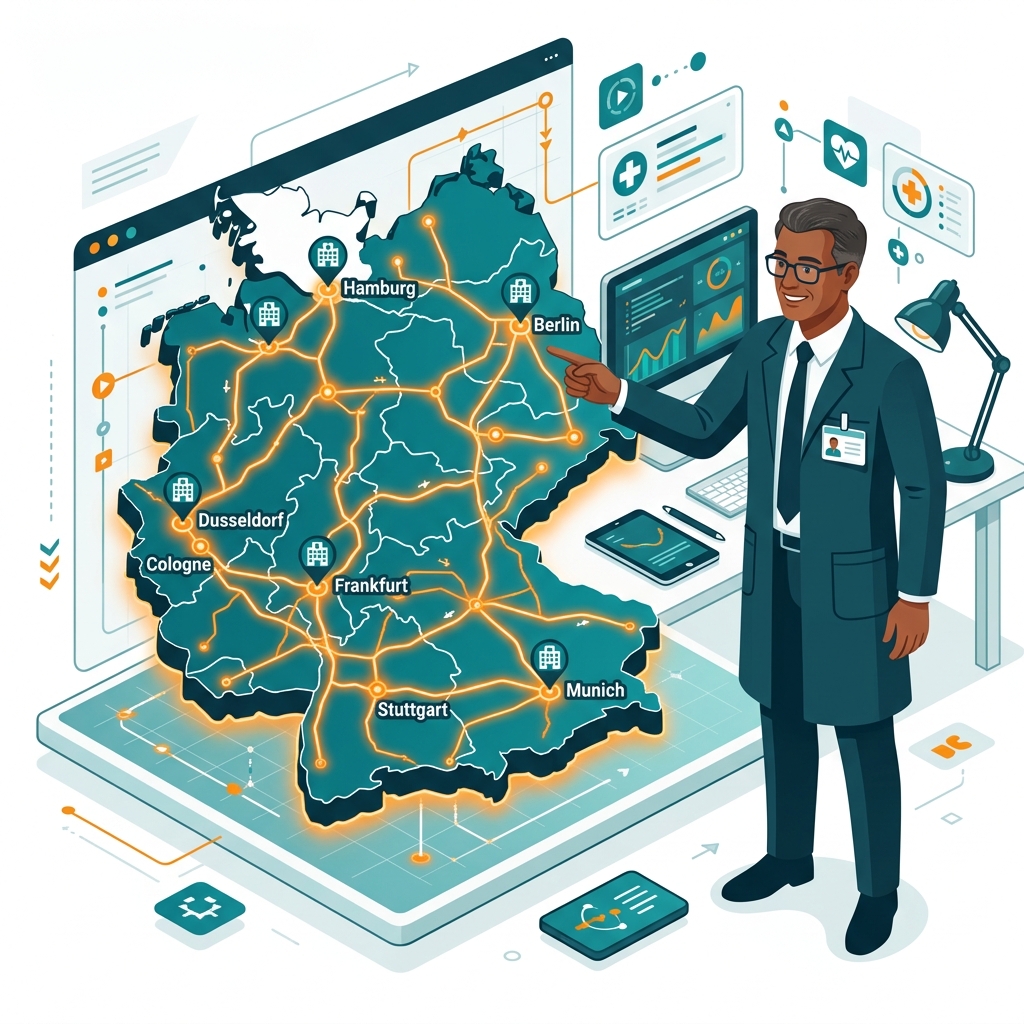
PG in Germany after MBBS is one of the most practical routes for Indian doctors who want specialist training abroad without depending on a NEET PG rank. Germany does not use the Indian MD/MS admission model. Instead, doctors enter the healthcare system through recognition of their medical degree, German language proof, the Fachsprachpruefung, and sometimes the Kenntnispruefung. After licensing, specialist training is completed as paid hospital employment, commonly called Facharztausbildung.
This guide explains the full MBBS to Germany pathway in a realistic way: eligibility, exams, documents, timeline, salary, costs, advantages, risks, and how to plan each stage. It is written for Indian MBBS graduates, interns, post-internship doctors, junior residents, and doctors who are comparing Germany with NEET PG, USMLE, PLAB, or other medical career options.
What PG in Germany Actually Means
In India, the phrase PG usually means MD, MS, DNB, or diploma training through a competitive entrance pathway. In Germany, the equivalent career stage is different. You work as an Assistenzarzt, or resident doctor, in a hospital or approved training center while completing specialist training under the rules of the relevant state medical chamber. The German term is Facharztausbildung.
That difference matters for SEO and for real life. A doctor searching for "PG in Germany after MBBS" usually wants to know whether Germany gives a recognized specialist pathway after MBBS. The answer is yes, but it is not a university PG seat and it is not a classroom course. It is a structured professional training job. You learn by working in the German healthcare system, earn a monthly salary, rotate as required by your specialty, maintain logbook requirements, and eventually appear for the specialist examination.
Before you can work as a doctor, Germany must recognize that you meet the professional requirements for medical practice. For non-EU doctors, this normally involves Approbation, which is the permanent medical license, or a Berufserlaubnis, which is a temporary and state-specific permission to work under defined conditions. Read the full Approbation Germany guide and Berufserlaubnis guide if you want the licensing details.
Can Indian MBBS Doctors Do PG in Germany?
Yes. Indian MBBS doctors can build a medical career in Germany if they complete the recognition and licensing pathway. A recognized MBBS degree, completed internship, valid medical registration, German language ability, and a properly prepared document file are the starting points. Germany is a regulated profession market, so the question is not simply whether a hospital likes your CV. The question is whether you can legally practice medicine.
Most Indian doctors start preparing while they are still in India. The biggest early task is German. For medical practice, general German at B2 level is usually the minimum base, and the professional language exam tests whether you can take a history, document the case, and hand over clinical information in German. This is why the FSP exam is central to the process.
Some doctors may also need the Kenntnispruefung, often called KP. This is a medical knowledge examination used when the authority decides that the foreign medical education has substantial differences compared with German medical training. The authority may issue a Defizitbescheid, which is not a rejection. It is a formal decision explaining that knowledge equivalence must be proven. See Kenntnispruefung and Defizitbescheid explained for deeper detail.
Eligibility After MBBS
The basic profile for PG in Germany after MBBS usually includes an MBBS degree from a recognized medical college, completed internship, registration with the relevant Indian medical authority, a certificate of good standing where required, identity documents, and German language proof. Fresh graduates can start planning, but final licensing documents are normally easier after internship and registration are complete.
German authorities review documents carefully. They may ask for degree certificates, transcripts, internship proof, curriculum details, subject hours, registration certificates, good standing certificates, birth certificate, passport copy, German CV, declaration documents, health and character declarations, and certified translations. Exact requirements vary by Bundesland, so do not treat a WhatsApp checklist as the final authority. Use the documents required for Approbation Germany checklist as a planning base, then confirm the state-specific list.
You do not need NEET PG for Germany. You do not need an Indian PG seat. You do not need research publications to start. Clinical experience can help your confidence and interviews, but the central filters are language, documentation, licensing, and employer fit.
Step-by-Step Pathway From MBBS to Germany
- Learn German from A1 to B2. Start early and treat language like the core exam. Most doctors need 8-12 months of serious study to reach a functional B2 level.
- Build medical German. General B2 is not enough for hospital communication. Start history-taking, symptom vocabulary, documentation language, and case presentation practice early.
- Prepare documents. Collect MBBS degree, marksheets, internship certificate, NMC or state medical registration, good standing, passport, birth certificate, CV, and other state-specific forms.
- Choose the right German state. Each state has its own authority and process. Processing times, document expectations, exam flow, and Berufserlaubnis practice can differ.
- Apply for recognition or Approbation. The authority evaluates your medical education and decides whether direct equivalence is accepted or a KP route is required.
- Pass the FSP. The Fachsprachpruefung checks medical communication, not textbook theory alone.
- Pass KP if required. If you receive a Defizitbescheid, prepare for the knowledge exam with a structured plan.
- Secure work as Assistenzarzt. With the correct license or temporary permit, you can begin paid specialist training in an eligible department.
- Complete Facharztausbildung. Duration depends on specialty and training regulations, often around five to six years.
Germany PG vs NEET PG vs USMLE vs PLAB
| Pathway | Main Entry Filter | Training Model | Key Challenge |
|---|---|---|---|
| Germany after MBBS | German language, Approbation, FSP, KP if required | Paid hospital employment | German language and licensing patience |
| NEET PG India | Rank and seat availability | MD/MS/DNB seat | High competition and specialty constraints |
| USMLE USA | Scores, CV, match profile, interviews | Residency match | Cost, match uncertainty, long preparation |
| PLAB/UK | GMC registration and job market | NHS jobs and training entry | Training bottlenecks and competition |
Germany is not automatically easier than every other route. It is simply a different filter. If you are strong in memorization but unwilling to learn German, Germany will feel difficult. If you are ready to build language skill and work through documentation, Germany can become a highly structured option with paid training and long-term European career value.
German Language Requirements
German is the backbone of the pathway. Patients describe pain, fear, consent concerns, past medical history, medication use, family history, and social details in German. Nurses, senior doctors, insurance systems, discharge summaries, and emergency handovers also run in German. That is why Germany treats language as a patient-safety requirement, not a decorative certificate.
A realistic plan is A1 and A2 for foundation, B1 for daily communication, B2 for professional readiness, then medical German for the FSP. Some states may ask for specific certificates or professional language proof. The exact form can vary, but the practical target is the same: you must communicate safely with patients and colleagues.
Do not postpone medical German until after B2. Once you have basic grammar, begin learning common symptoms, body systems, examination phrases, consent language, pain descriptions, and documentation patterns. This reduces the shock when FSP preparation begins.
FSP and KP: The Two Exams Indian Doctors Hear About Most
The FSP is a professional language exam. It typically tests three practical abilities: doctor-patient conversation, written documentation, and doctor-doctor communication. You are not expected to sound like a German poet. You are expected to be safe, structured, clear, empathetic, and medically precise.
The KP is different. It tests medical knowledge equivalence. Internal medicine and surgery are common core areas, with emergency medicine, pharmacology, legal basics, and case-based reasoning often appearing depending on state and format. The KP is usually relevant after the authority identifies deficits. Many Indian doctors worry when they hear this term, but it should be approached as a structured exam, not as a career-ending event.
For a strong PG in Germany plan, prepare the two tracks together: language communication for FSP and clinical reasoning for KP. Doctors who separate them too much often struggle to present clinical knowledge in German even when they understand medicine well.
Timeline for PG in Germany After MBBS
A realistic timeline from India to medical work in Germany is usually 12-24 months, depending on language speed, document readiness, state processing, exam dates, and visa timing. A fast candidate who studies German full-time, collects documents early, and receives quick authority processing may move faster. A working doctor studying part-time or correcting document gaps may need longer.
| Stage | Typical Duration | Main Output |
|---|---|---|
| German A1-B2 | 8-12 months | Language certificate and communication base |
| Documents and translations | 1-3 months | Submission-ready file |
| Authority processing | 3-12 months | FSP/KP decision or recognition step |
| FSP and job preparation | 2-4 months | Language exam pass and employer readiness |
Because state rules and processing times can change, always confirm current requirements from the relevant German authority and official sources such as Recognition in Germany and Make it in Germany.
Salary During PG in Germany
One of the biggest advantages of Germany is that specialist training is paid employment. Resident doctors normally earn a monthly gross salary according to hospital type, collective agreement, experience level, duties, and region. Night duties, weekend duties, and overtime rules can add to the final monthly income. For updated salary planning, read doctor salary in Germany.
This is very different from paying high tuition or donation for a PG seat. You still need upfront investment for German classes, exams, translations, visa preparation, relocation, and living expenses before your first job. But once you are working with the correct permission, the model becomes salary-based.
Specialties Available in Germany
Germany has a wide range of specialist pathways: internal medicine, general medicine, anesthesia, surgery, orthopedics and trauma, gynecology, pediatrics, psychiatry, radiology, dermatology, ENT, ophthalmology, neurology, pathology, and many more. Entry is not handled through a single national PG allotment system. You apply to departments and employers, and your chances depend on license status, German communication, clinical profile, vacancies, geography, and interview performance.
Some specialties are more competitive than others. Smaller towns and less glamorous departments may offer easier first entry. Many international doctors begin strategically, build German clinical experience, and then move toward their desired specialty as their profile strengthens.
Costs to Budget Before You Earn
The pathway is not free at the preparation stage. Budget for German language courses, exam fees, document attestation, certified translations, courier costs, application fees, FSP or KP fees, visa application, travel, accommodation, health insurance, and initial living expenses. Costs vary widely by city, provider, state, number of attempts, and whether you study full-time or part-time.
The most common financial mistake is budgeting only for language classes. The second mistake is arriving in Germany without enough reserve for exam waiting time or job transition. Build a conservative plan so you are not forced into rushed decisions.
Common Mistakes Indian Doctors Make
- Starting German casually and expecting B2 to happen in a few months.
- Preparing documents after language completion instead of running both tracks in parallel.
- Assuming every Bundesland follows the same process.
- Confusing Approbation, Berufserlaubnis, FSP, KP, and visa stages.
- Choosing a specialty plan before understanding first-job realities.
- Using outdated online advice for current authority or visa rules.
- Ignoring medical German until the FSP date is close.
Who Should Choose Germany After MBBS?
Germany is a good fit for doctors who can commit to language learning, tolerate paperwork, think long term, and want paid clinical training in Europe. It is especially attractive for doctors who do not want their entire future to depend on one entrance rank and who are ready to adapt to a new healthcare culture.
Germany may not be the right fit if you want an English-only pathway, need instant results, cannot invest in language, or want a guaranteed specialty before you begin. A mature decision means understanding both the opportunity and the work required.
How to Choose the Best Consultancy for Medical PG in Germany
Many doctors search for the best consultancy for medical PG in Germany because the pathway has too many moving parts to manage casually. A good consultancy should not simply promise Germany. It should explain Approbation, Berufserlaubnis, FSP, KP, state selection, document preparation, visa timing, and job-readiness in a sequence that makes sense for your profile.
When comparing consultancies, ask specific questions. Who reviews your documents? Do they understand the difference between Approbation and Berufserlaubnis? Can they explain why one Bundesland may fit your case better than another? Do they prepare you for medical German communication, not just general language certificates? Do they give realistic timelines and costs? Do they support doctors after arrival, or only until payment is complete?
The best consultancy in India for medical PG in Germany should be able to say no when Germany is not right for a candidate. That honesty matters. A doctor with weak language commitment, unrealistic specialty expectations, or incomplete documents needs a correction plan before moving forward. MedGermany focuses on that kind of practical guidance because a well-planned pathway is always stronger than a rushed application.
How MedGermany Helps
MedGermany helps Indian doctors plan the complete route from MBBS to Germany through Medical PG Germany consultancy: profile assessment, language roadmap, document strategy, state selection, Approbation planning, FSP and KP preparation direction, visa coordination, and career positioning. The goal is not to sell Germany as magic. The goal is to help you avoid preventable mistakes and move through the process with a clear sequence.
Month-by-Month Execution Plan for MBBS Doctors
A realistic medical PG plan should run on parallel tracks. In months one to three, begin German seriously, collect MBBS degree documents, confirm internship and registration status, renew passport if needed, and understand Approbation basics. Do not wait for B2 before touching documents. Many doctors lose months because their university, council, or translation work starts too late.
In months four to eight, continue German toward B1 and B2 while starting medical German vocabulary. Learn to take history, present cases, explain pain, discuss medications, and document basic findings. During the same period, review state options and identify likely document gaps. In months nine to twelve, move from general German into FSP-style communication, prepare your CV, and build a realistic timeline for application, visa, and exam stages.
State Selection and First Job Strategy
Germany is not one single processing office. State selection affects documents, communication, exam sequence, and sometimes the speed of your route. The best state is not always the one someone online called easiest. The best state is the one that fits your documents, German level, career target, finances, and timeline. A rushed state choice can create avoidable rework.
First job strategy should start early too. Medical PG in Germany is employment-based Facharzt training. Hospitals want doctors who can communicate, document, work in a team, and handle stress safely. Specialty flexibility helps. A doctor who is open to smaller cities or less competitive entry points may start faster than a doctor who insists on a narrow specialty and famous city from day one.
How Medical PG Mirrors the Dental PG Pathway
For dental readers, the counterpart is dental PG in Germany after BDS. The two pathways share German language, documents, recognition, visa planning, and exam discipline. But the professional outcome differs. MBBS doctors move toward Approbation and Facharzt training. BDS dentists move toward dental Approbation, work as dentists, and possible later dental specialization.
This distinction matters for SEO and for students. A doctor should not follow a dental pathway, and a dentist should not depend on generic MBBS advice. MedGermany keeps both tracks connected but separate so each candidate understands the right professional route.
Clinical Readiness During German Study
German study can become so intense that doctors stop reviewing medicine. Keep clinical reasoning active. Review common internal medicine, surgery, emergency, pharmacology, and documentation topics. Practice explaining a chest pain case, abdominal pain case, diabetes review, hypertension plan, fever workup, and post-operative complication in simple German. This prepares you for FSP, KP, and interviews.
A useful weekly exercise is to present one case out loud in three formats: patient explanation, colleague handover, and written note. This single exercise joins language with clinical thinking and prevents the pathway from becoming a language-only project.
Family and Financial Planning
Medical PG in Germany can be financially attractive after employment, but the preparation phase requires investment. Families should understand that German classes, translations, attestation, exams, visa, travel, and living expenses come before salary. If family expects instant income, pressure may rise at exactly the wrong stage.
Create a written budget with conservative buffers. Include a backup plan if exam dates, visa processing, or job entry take longer than expected. Financial calm helps you make better decisions and avoid desperate shortcuts.
How to Measure PG Readiness
You are not PG-ready just because you like the idea of Germany. You are becoming ready when your German study is consistent, documents are organized, your state options are realistic, and you can explain the pathway without confusing Approbation, Berufserlaubnis, FSP, KP, and Facharzt training. Readiness is visible in habits, not motivation alone.
Use a monthly checklist. Track German hours, medical German speaking practice, documents requested, documents received, translations planned, official sources checked, and financial reserve built. If a month passes with no measurable progress, the plan needs correction. Germany rewards doctors who convert ambition into routine.
What Happens After You Start Facharzt Training?
Once you begin work, you are no longer only an applicant. You are a junior doctor in a German clinical team. You must learn ward routines, documentation, handovers, patient communication, electronic systems, duty schedules, and specialty expectations. The first months can be demanding, but they are also where the pathway becomes real.
Keep learning German after employment starts. Medical vocabulary, dialect exposure, phone calls, discharge summaries, and emergency communication all improve with practice. Facharzt success depends on long-term adaptation, not just entry into Germany.
Next Step for Serious Applicants
If you are serious, turn the guide into action today: set a German schedule, list missing documents, check your passport validity, and write your target timeline.
Book a consultation if you want to check whether your MBBS profile, language timeline, and career goals fit the German PG pathway.
Ready to Start Your Journey?
Get expert guidance from doctors who have already walked this path.
Book a Consultation