Medical and Dental Career in Germany
Can You Work in Germany as a Doctor Without Approbation?

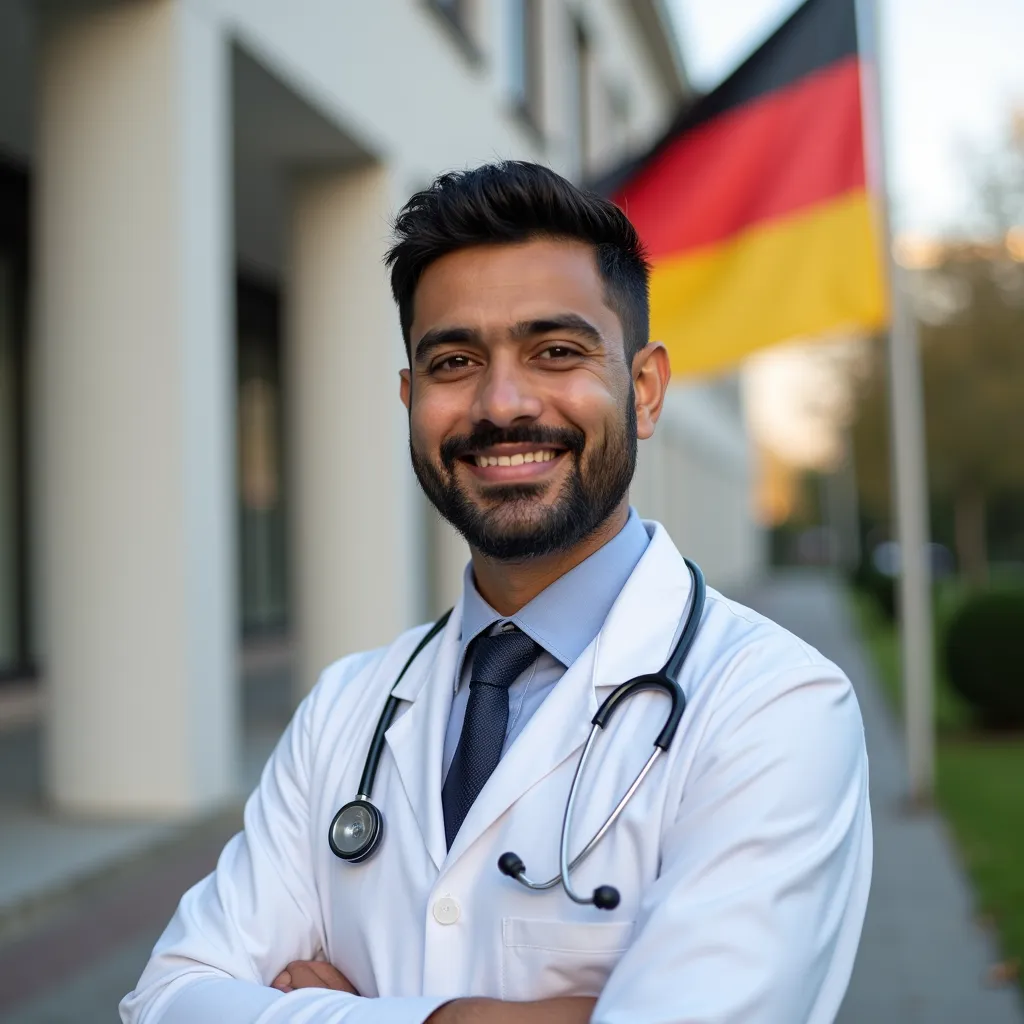
Can You Work in Germany as a Doctor Without Approbation?
Approbation, Berufserlaubnis and Safe Career Planning
Can You Work in Germany as a Doctor Without Approbation?
A doctor-led guide for Indian MBBS doctors on what is legally possible before full German Approbation, what is not, and how to plan the route safely.
For Indian doctors planning medical work, Hospitation, Berufserlaubnis and Facharzt training in Germany
Direct answer: In Germany, you cannot independently work as a fully licensed doctor without Approbation. Indian doctors may be able to do limited activities before Approbation, such as Hospitation, research or non-clinical roles, or clinical work only if they receive a temporary professional permit called Berufserlaubnis from the responsible authority. The rules are state-specific, employer-specific and document-dependent, so do not accept any promise that you can simply start as a doctor without licensing.
Table of contents
1. Who this guide is for
This article is for Indian MBBS doctors who are serious about Germany but are not yet fully licensed there. You may be in India preparing German language, waiting for document verification, applying for Approbation, looking for Hospitation, or considering whether to travel before the full licence is issued. The question is practical: can you earn, observe, train or work in a hospital before full Approbation?
The answer matters because Germany has a regulated medical profession. Medical work is not the same as a general job search. The Approbation Germany route, FSP, possible Kenntnisprüfung, visa strategy and employer contract all connect to one another. A hospital may like your profile, but it still cannot ignore licensing rules.
This guide is for the doctor route only. It is not the BDS dental Approbation route and it is not the nursing Anerkennung route. Dentistry and nursing have separate recognition structures, documents and job permissions. For MBBS doctors, the key distinction is between full Approbation, temporary Berufserlaubnis, observation through Hospitation and non-clinical work.
2. What Approbation means in Germany
Approbation is the unrestricted licence to practise medicine in Germany. Once granted, it allows a doctor to work as a physician across Germany, subject to normal employment and specialty training requirements. For Indian doctors, Approbation usually requires recognition of the medical degree, complete documentation, German language proof, FSP in many states, and sometimes a Kenntnisprüfung if substantial equivalence is not confirmed.
Official German recognition guidance explains that doctors with foreign qualifications need recognition before practising the regulated profession. The competent authority checks the qualification, documents and language. If the authority finds gaps, further steps may be required. This is why a candidate can be clinically experienced in India but still not automatically permitted to practise independently in Germany.
It is also important to understand what German Medical PG means. Germany does not offer the Indian-style NEET PG seat model for Facharzt training. Medical residency is paid hospital-based work as an Assistenzarzt, and that work depends on licensing readiness. If you are planning PG in Germany after MBBS, Approbation or a valid temporary permission is central to the plan.
| Status | What it usually means | Typical limitation |
|---|---|---|
| Approbation | Full medical licence for Germany | Still need an employer and specialty training position |
| Berufserlaubnis | Temporary, restricted permission to work as a doctor | Time, state, employer, department or supervision restrictions may apply |
| Hospitation | Observation or shadowing in a clinical setting | Not independent patient care; often unpaid or limited |
| Research/non-clinical role | Work not involving independent medical treatment | May not count as clinical Facharzt training |
3. What you may do before Approbation
There are a few realistic options before full Approbation, but each has boundaries. The best option depends on your German level, documents, authority stage, visa route and whether a hospital is willing to support you.
Hospitation: useful, but not a licence
A Hospitation in Germany is usually an observership or shadowing period. It can help you understand hospital culture, improve medical German listening skills, build contacts and show motivation. However, Hospitation is not a shortcut to independent clinical work. You should not present yourself as a fully working doctor, prescribe, take responsibility for treatment or perform procedures unless the hospital and legal framework clearly permit a very limited supervised activity.
Research or academic roles
Some doctors consider research assistant roles, PhD-related work, clinical documentation, public health, data, pharmaceutical or other non-clinical positions. These may be possible without Approbation if the role does not require practising medicine. But the visa, employer contract and job duties still matter. A research job may support your exposure to Germany, but it normally does not replace the Approbation pathway or automatically start Facharzt training.
Clinical work with Berufserlaubnis
The most relevant option is Berufserlaubnis, a temporary permit that can allow restricted medical work before full Approbation. It is not granted automatically. The competent authority decides, and the permit can be limited by state, employer, time period, supervision and field. Some candidates may use it while preparing for or waiting for further licensing steps, but requirements vary significantly.
4. What you should not do without a licence
Indian doctors sometimes receive confusing advice online: “Go to Germany first, join any hospital and then convert later.” This is risky. Without Approbation or valid Berufserlaubnis, you should not independently diagnose and treat patients as a doctor, sign medical orders, prescribe medication, perform unsupervised procedures, introduce yourself as licensed to practise, or accept a role whose real duties require a medical licence.
The risk is not only legal. It can damage your credibility with hospitals and authorities. German employers are cautious because hospitals must comply with professional law, insurance, patient safety and documentation standards. A good employer will ask for your licensing status clearly. If an offer sounds too easy, check it more carefully.
Also remember visa conditions. A visa or residence permit may restrict what kind of work you can do. Even if a hospital department is friendly, immigration rules and professional licensing rules are separate. You need both to be aligned.
5. Berufserlaubnis explained for Indian doctors
Berufserlaubnis is a temporary permission to practise medicine under restrictions. It can be very helpful, but it should not be marketed as a guaranteed shortcut. Official recognition information makes clear that regulated medical practice requires permission from the competent authority, and temporary permission depends on the case.
Typical factors include your degree documents, identity documents, proof of good standing, health and police clearance, German language level, sometimes FSP status, employer confirmation, and the authority's assessment. Some states may expect certain steps before granting permission. Some hospitals may not recruit before Approbation. Others may consider candidates with Berufserlaubnis for supervised roles.
| Question to ask | Why it matters |
|---|---|
| Is Berufserlaubnis possible in this state for my situation? | Rules and practice vary by authority. |
| Do I need FSP before clinical work? | Many clinical roles require professional medical German readiness. |
| Is the permit tied to one employer or department? | A restricted permit may not be transferable. |
| Will this work count toward Facharzt training? | Recognition of training time is a separate practical question. |
6. Practical roadmap before full Approbation
The safest route is not to chase any job title. Build licensing readiness in the right order. For most Indian doctors, the plan looks like this:
- Clarify your target route: Decide whether you are pursuing full Approbation directly, a Berufserlaubnis-supported entry, Hospitation first, or further preparation in India.
- Prepare documents early: Degree, internship, registration, good standing, experience letters, passport, police clearance, health certificate, translations and apostille where required. Use a proper documents checklist for Approbation Germany.
- Build German in parallel: General B2 is not enough for safe hospital work. You need medical German for history taking, handover, documentation and FSP. Review the FSP exam expectations early.
- Choose state and authority strategically: State choice affects document flow, timelines, FSP/KP process and practical job strategy.
- Apply to hospitals honestly: Your CV should state your licence status clearly: Approbation pending, FSP planned or passed, Berufserlaubnis possible, or Hospitation requested.
- Align visa and role: Use the correct visa or residence path for your stage. Doctors and dentists should avoid treating visa planning as a last-minute formality.
If you are unsure whether a temporary work route makes sense, compare it with waiting for Approbation or using Hospitation to build hospital exposure. The best route is the one that keeps your legal status, language readiness, authority strategy and career goal aligned.
7. India-specific notes for MBBS doctors
Indian doctors often have strong clinical exposure, but Germany evaluates the professional right to practise through its own recognition system. Do not assume that internship completion, state medical council registration, NEET PG preparation or Indian hospital experience automatically answers German licensing questions. They are useful for your profile, but the German authority still checks documentation, language and equivalence.
Be especially careful with agents or social media posts claiming that Germany has “no exam” or that you can work first and complete language later. Germany does not require NEET PG for Facharzt entry, but that does not mean there are no barriers. The real barriers are German language, complete documents, FSP, possible KP, visa readiness, hospital interviews and safe adaptation to German clinical systems.
8. Common mistakes to avoid
- Confusing Hospitation with paid doctor work: observation is valuable, but it is not full clinical employment.
- Applying with vague licence status: hospitals need clarity on Approbation, Berufserlaubnis and FSP stage.
- Ignoring state variation: one candidate's experience in one Bundesland may not apply to another.
- Overlooking visa restrictions: professional permission and immigration permission must both match the role.
- Delaying documents: missing translations, good standing certificate or authority forms can block every next step.
- Believing guaranteed-job promises: no ethical advisor can guarantee licensing, permit approval or a hospital job.
9. How MedGermany helps
MedGermany helps Indian doctors understand the full pathway instead of chasing isolated shortcuts. The team can help you review your profile, document stage, language plan, Approbation strategy, FSP/KP risk, Hospitation possibilities, Berufserlaubnis questions and hospital application readiness. The goal is to make your Germany plan practical, compliant and realistic.
Planning your Germany pathway?
MedGermany can help you understand your profile, documents, language stage, FSP/KP route, and next practical step.
FAQ: working in Germany as a doctor without Approbation
Can I work as an Assistenzarzt without Approbation?
You normally need Approbation or a valid Berufserlaubnis for clinical doctor work. Whether a temporary permit is possible depends on the authority, employer and your documents.
Is Hospitation paid in Germany?
Hospitation is often unpaid or only modestly supported, though arrangements vary. Its main value is exposure, networking and understanding the hospital system, not guaranteed income.
Can I do research in Germany without Approbation?
Research or non-clinical roles may be possible if they do not involve practising medicine. Check the job duties, visa conditions and employer requirements carefully.
Does Berufserlaubnis guarantee Approbation later?
No. Berufserlaubnis is temporary and restricted. Full Approbation still depends on completing the authority's recognition requirements, language steps and any required exam.
Should Indian doctors go to Germany before FSP?
It depends on your language level, visa route, documents, finances and plan. Some candidates benefit from exposure; others are safer completing language and documents first.
Can I start Facharzt training without full Approbation?
Some supervised work under Berufserlaubnis may be possible in certain cases, but recognition of training time and long-term Facharzt planning should be checked with the relevant medical chamber and employer.
Source note: This guide is based on official recognition principles from Anerkennung in Deutschland and Make it in Germany, plus German state authority practice around Approbation and temporary professional permission. Requirements vary by Bundesland, responsible authority, employer and visa status, so candidates should verify current instructions before accepting any role.